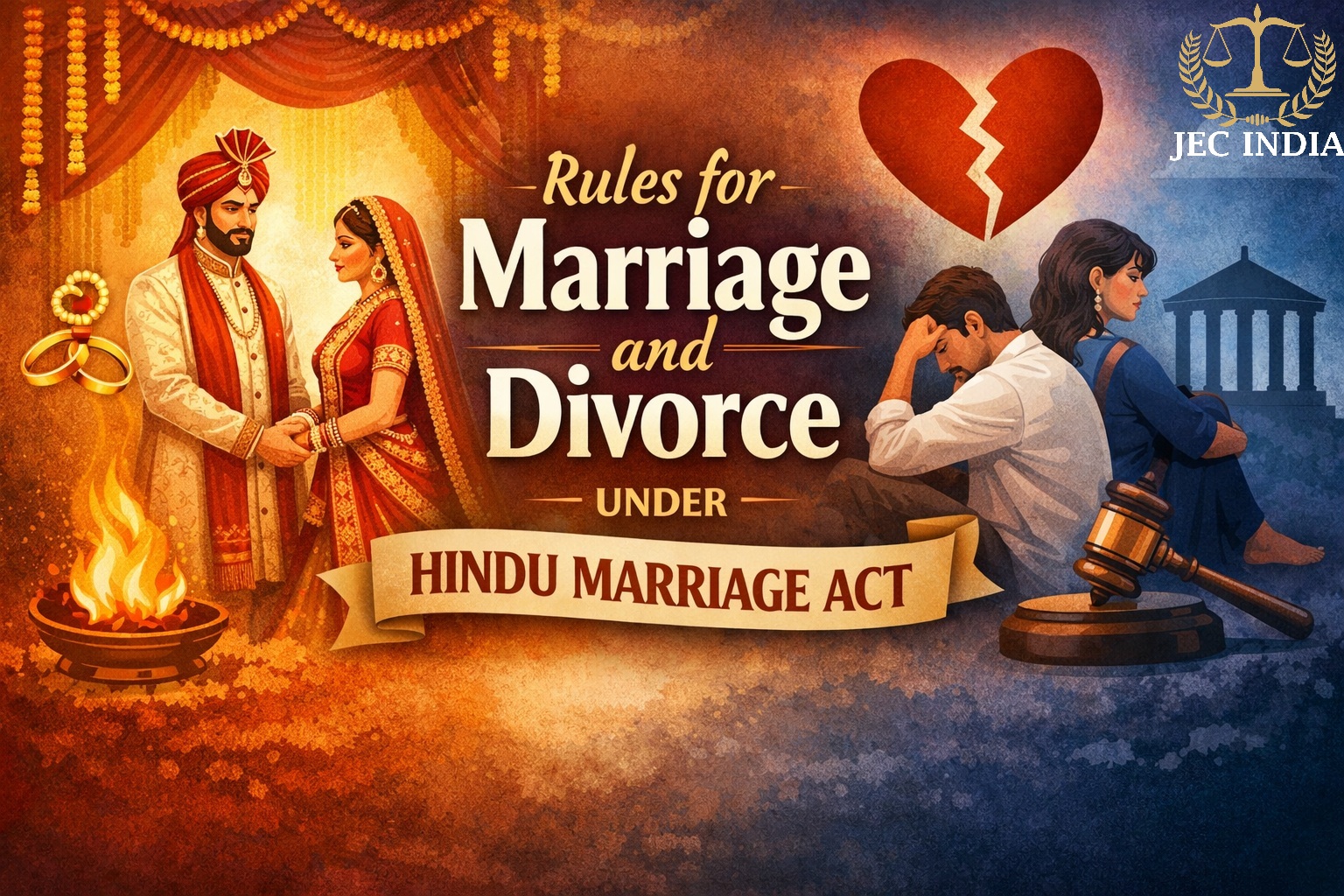
The Hindu Marriage Act, came in 1955 and it is the primary law governing marriage and divorce among Hindus families in India. It applies equaly to Hindus, Buddhists, Jains, and Sikhs and provides clear legal rules regarding valid marriage, rights of spouses, and conditions for divorce. Understanding these provisions is important for anyone planning marriage or facing marital disputes.
Applicability of the Hindu Marriage Act 1955,
The Act applies to:
- Hindus by religion (including followers of Arya Samaj and Brahmo Samaj)
- Buddhists, Jains, and Sikhs
- Anyone who is not Muslim, Christian, Parsi, or Jew, unless governed by another personal law
This act covers marriage, restitution of conjugal rights of spouse, judicial separation, divorce, and maintenance of spouse.
Essential Conditions to apply for a Valid Hindu Marriage
Under Section 5 of the Hindu Marriage Act 1955, a Hindu marriage is valid only if these conditions are fulfilled:
1. Monogamy
Neither party should have a living spouse at the time of marriage. Bigamy is punishable under Hindu marriage act but not as per the Indian law.
2. Sound Mind
Both bride and groom must be mentally fit and capable of giving their valid consent and they should not suffer from severe mental disorders.
3. Legal Age as per the Law
- Groom: Minimum 21 years
- Bride: Minimum 18 years
Child marriage is illegal, though not always automatically void for this need to file case.
4. Prohibited Relationships
Marriage between close blood relatives is not allowed unless permitted by any local custom.
5. Sapinda Relationship
Marriage between close ancestral relations (sapinda) is prohibited unless customary exceptions apply, five ancestrs of father side and three from mother’s side.
Ceremonies of Hindu Marriage
A Hindu marriage is usually solemnized through various required traditional rituals like Saptapadi (seven steps around sacred fire). Once rituals are completed, the marriage becomes legally valid. Registration is recommended but not mandatory in many states but now in Uttar Pradesh it is required.
Rights and Duties of Spouses
The Hindu marriage Act 1955 recognizes mutual rights and responsibilities, including:
- Right to live together
- Right to maintenance
- Protection against cruelty
- Right to seek legal remedies in case of desertion or abuse
Either spouse can approach the court if theit marital obligations are violated by other one .
Restitution of Conjugal Rights
If anyone spouse withdraws from the other one without reasonable cause, the affected spouse can file a petition before the court for restitution of their conjugal rights. The court may order the partner to resume marital cohabitation.
Judicial Separation
Judicial separation allows couples to live apart without dissolving their marriage. It is often considered a cooling-off period before divorce. Grounds include:
- Cruelty
- Adultery
- Desertion
- Conversion to another religion
After judicial separation, parties may later seek for divorce if required otherwise they can live together .
Grounds for Divorce Under Hindu Marriage Act 1955
This Act provides multiple grounds for divorce under Section 13th:
1. Adultery
Voluntary sexual relationship with someone outside marriage, but somehow it is not applicable in .
2. Cruelty
Physical or mental cruelty, including harassment and abuse.
3. Desertion
If a spouse abandons the other for at least two continuous years.
4. Conversion
If a spouse converts to another religion.
5. Mental Disorder
Severe mental illness making marital life difficult.
6. Communicable Disease or Renunciation
Leprosy (now largely removed in amendments), venereal disease, or renouncing the world for religious life.
7. Presumption of Death
If a spouse is not heard from for seven years.
Divorce by Mutual Consent
Section 13B allows divorce by mutual consent if:
- The couple has lived separately for at least one year
- Both agree that marriage has broken down irretrievably
It is the fastest and least complicated form of divorce in India.
Maintenance and Alimony
Courts can grant after review the application and circumstances :
- Interim maintenance during proceedings
- Permanent alimony after divorce
Both husband and wife can claim maintenance depending on financial conditions.
Child Custody and Welfare
In divorce cases involving children, courts prioritize the best interests of the child. Custody may be:
- Physical custody
- Joint custody
- Visitation rights
The child’s welfare always overrides parental claims.
The Hindu Marriage Act, 1955, provides a comprehensive legal framework for marriage and divorce among Hindus in India. It ensures fairness, protects spouses’ rights, and offers legal remedies for marital disputes. Whether entering marriage or considering separation, understanding these provisions helps individuals make informed and legally sound decisions. Connect us if you are looking for Best Lawyers in Etawah or best Criminal Lawyer in Etawah for any other matter